
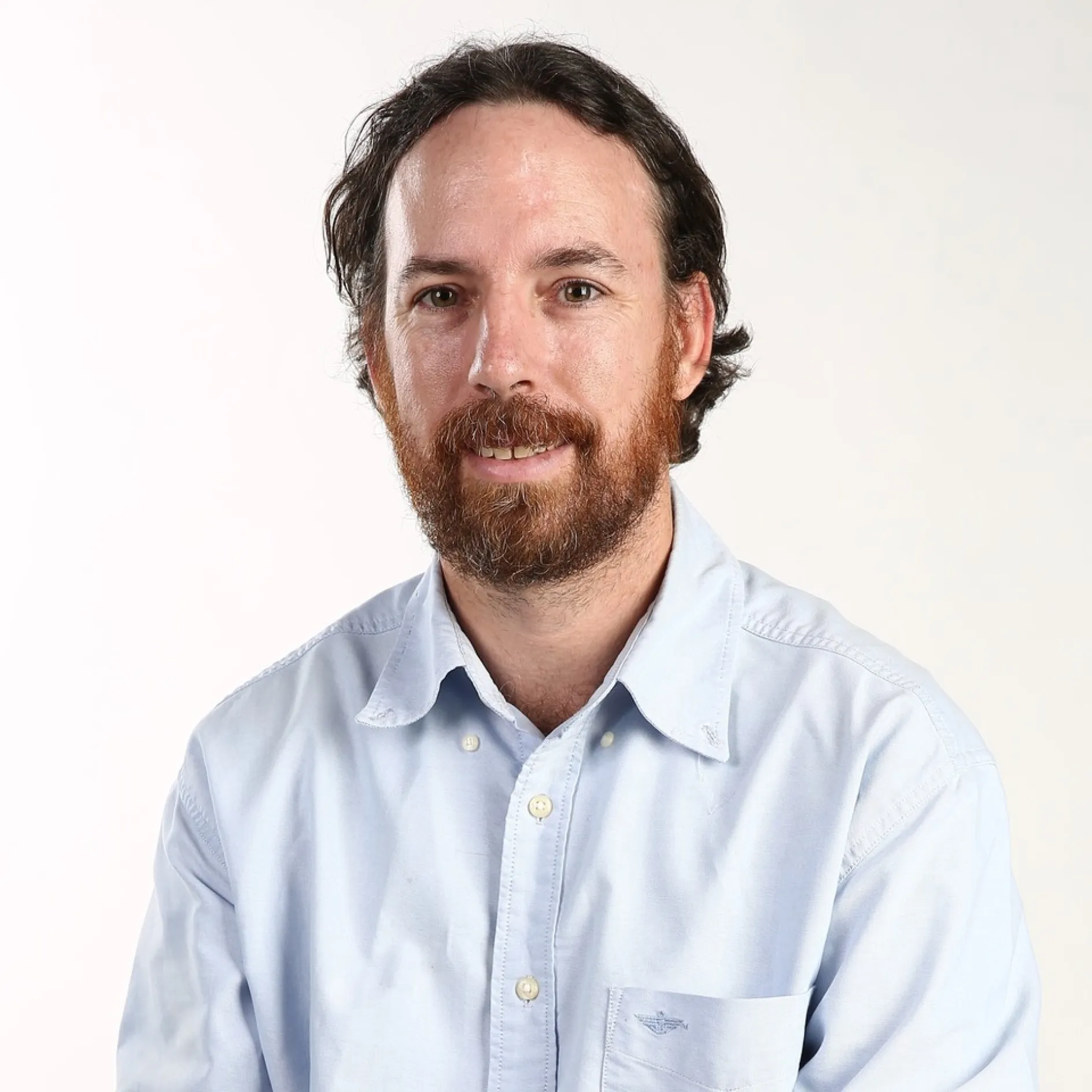
Dr. Daly has spent over 25 years conducting multi-disciplinary field research in Asia, Europe, and the Middle East on long-term societal adaptation to natural hazards and climate change; the effectiveness and sustainability of post-disaster humanitarian and development assistance, and the relationship between cultural heritage, environmental change, and resilience. He joined Wash U in 2024 as Co-PI of the Minerva-funded “Modelling Scales of Societal Resilience in the Asia-Pacific’ project.
His overarching research goal is to better understand what it means to be resilient, both at individual and communal levels, within coupled human and environmental systems. He is especially interested in how resilience and vulnerability are produced within long-term historical trajectories; the roles political and social institutions play within adaptation to and recovery from environmental stresses; and the factors that influence the effectiveness and sustainability of humanitarian and development assistance. He uses a mix of environmental/landscape archaeology and applied anthropology methods. Over the past 20 years he has Directed or Co-Directed a number of major international multi-disciplinary research projects, including:
· The Maritime Asia Heritage Survey: An eight-year project funded by a $6.2 million USD grant from the Arcadia Fund to locate, digitally document, and create virtual open-access archives for heritage resources threatened by environmental stress and climate change in the Maldives, Indonesia, and Thailand.
· Singapore COVID Vulnerability Survey: A quantitative social science and public policy survey to track changing perceptions of risk and vulnerability during the Covid-19 pandemic in Singapore.
· The Aftermath of Aid Project: A 15 year applied anthropological assessment of the long-term effectiveness and sustainability of humanitarian and development assistance in Aceh, Indonesia after the 2004 Indian Ocean tsunami.
· The Nepal Urban Reconstruction Project: A six year anthropological, sociological, and human geography analysis of aid governance, disaster justice, urban resilience, and local community mobilization within historic urban neighborhoods in the Kathmandu Valley following the 2015 earthquakes in Nepal.
· The Aceh Geohazards Project: A ten year archaeological and geological field survey to build out a comprehensive paleo-tsunami history of the western coast of Sumatra to inform future hazard risk for coastal inhabitants around the eastern Indian Ocean world.
Earlier in his career, he was part of major environmental history research projects in Europe, the Near East and Southeast Asia. From 1995 – 2000, he worked on the Wadi Faynan Landscape Project, an empirically grounded study of the relationship between human activity and desertification in southern Jordan from the later prehistoric period through present day. From 1998 – 2006 he was one of the core members of a team studying over 75,000 years of environmental and human history in Island Southeast Asia at the Niah Caves in Sarawak. From 1996 – 2007 Patrick was a core member a University of Oxford based study of cultural landscape evolution from the late bronze age through the Romano-British period Oxfordshire.
Prior to arriving at Wash U, he held previous research and teaching appointments at the Earth Observatory of Singapore, Nanyang Technological University, the Asia Research Institute, National University of Singapore, An-Najah National University, Palestine, and the McDonald Institute for Archaeological Research, University of Cambridge. Daly served as the Deputy Director and instructor of the University of Oxford archaeological field school; he was a Senior Lecturer at the University Scholars Programme, NUS, where he was awarded 3 university teaching excellence awards; and he co-taught the Climate Change course at the Asian School of the Environment, NTU.